Cold vs Warm Therapy for Nerve Pain in Feet
Should You Use Cold or Warm Therapy for Nerve Pain in Feet?
Temperature is a comfort tool, not a cure. Cool soaks and moisture-wicking socks often calm nighttime burning, because warmth tends to amplify it; gentle warmth and warm baths can ease stiffness and support circulation for some people. The key caution is safety: numb feet cannot judge temperature, so avoid extremes, test the water first, and check your skin.
- Cool: best for burning, hot, night-worse feet — use cool, never icy.
- Warm: best for stiffness and aching — use lukewarm, never hot.
- Safety first: numb feet can be burned or frozen without you feeling it.

Temperature is a symptom tool, not a treatment
Before anything else, let us be clear about what this is and is not. Applying cool or warmth to the feet can change how symptoms feel in the moment — it can soothe, distract and relax — but it does not repair nerves or treat the underlying cause of neuropathy. Think of it the way you would think of a cool cloth on a headache: a legitimate comfort measure that buys relief, not a fix. Used that way, and used safely, temperature can be a genuinely useful part of a daily routine.
The reason temperature works as a comfort tool is that nerve symptoms and temperature are closely linked. Irritated sensory nerves are sensitive to heat and cold, and the same warmth that feels cosy on healthy skin can turn up the volume on a burning foot. That connection is exactly what you can use to your advantage — once you know which way your own symptoms respond.
When cool helps: the burning, night-worse foot
The single most common pattern in foot nerve pain is burning that flares in the evening and in bed. For that pattern, cool is usually the friend. A cool (not icy) foot soak for a few minutes can take the edge off the heat sensation, and many people find that cooling the feet before bed makes it easier to settle. Practical, low-risk options include:
- A cool water soak — room-temperature to cool tap water, for a short session, never ice water.
- Moisture-wicking socks that keep the feet dry and cool rather than trapping heat.
- Breathable bedding and keeping the feet uncovered or under a light sheet at night.
- A cool pack wrapped in a cloth, applied briefly — never placed directly against the skin.
Cool works here because it does the opposite of what aggravates burning. Where warmth amplifies the heat sensation, a lower temperature dials it down and can make the difference between lying awake and drifting off.
Why warmth can worsen nighttime nerve pain
If your feet burn worse at night, the culprit is often the bed itself. Heavy covers trap heat around the feet, and that warmth can heighten the burning and tingling of irritated nerves. On top of that, the quiet of night removes the daytime distractions that kept your attention off your feet, so the sensation feels louder even if it is not objectively worse. The combination — more heat, fewer distractions — is why so many people describe evenings as their hardest hours. Keeping the feet cool and uncovered is one of the simplest countermeasures there is.
When warmth helps: stiffness, aching and cold feet
Warmth is not the enemy — it just suits a different problem. Gentle warmth can ease stiffness, relax tense muscles around the foot and ankle, and support local circulation, which is why a lukewarm bath feels good on stiff, achy or cold feet for many people. If your symptoms lean toward tightness and aching rather than burning, a short warm (not hot) soak or a warmed room can be the more comforting choice. Some people even alternate: warmth to loosen stiffness earlier in the day, cool to quiet burning at night. There is no universal rule — your own symptoms are the guide.
A quick word on “contrast” routines, where people alternate hot and cold soaks. For healthy feet this is a common recovery technique, but with reduced sensation it stacks two risks at once — the chance of a scald from the hot phase and skin damage from the cold phase — neither of which numb feet will warn you about. If you want to try both temperatures, keep them mild, separate them in time, and treat each session on its own safety terms rather than chasing an aggressive hot-to-cold swing. When in doubt, pick the single temperature that reliably calms your symptoms and leave the extremes alone.
Why temperature changes nerve pain at all
Temperature is not a placebo here; it acts on the same receptors that generate the symptom. Small unmyelinated C-fibres and thinly myelinated A-delta fibres carry both temperature and pain information, and several of the ion channels involved respond to heat and cold directly. That is the same biology exploited therapeutically at the extreme end: the capsaicin 8% patch works by over-stimulating a heat-sensitive channel until the nerve ending withdraws. Everyday warmth and cooling are far gentler versions of the same lever, which is why the effect is real but short-lived.
The practical asymmetry is that warmth tends to increase spontaneous firing in irritable small fibres while cooling tends to damp it. That matches what most people with burning feet at night report — a hot bath feels wonderful for five minutes and makes the evening worse. Cooling more often reduces the burn, but it comes with the larger safety problem in this population.
The safety rule that overrides personal preference
In a foot with reduced sensation, the usual feedback that stops you injuring yourself is gone. Both the American Diabetes Association position statement and the JAMA review of distal symmetric polyneuropathy treat loss of protective sensation as the central risk in this condition, because it converts an ordinary hot-water bottle, heating pad or ice pack into a burn or frostbite injury you will not feel happening. That is why the rules are non-negotiable: test water with your hand, elbow or a thermometer rather than your feet, keep hot water below body-comfortable levels, never sleep on a heat source, and never apply ice directly to skin.
Given that, the reasonable approach is short, timed, indirect applications — ten to fifteen minutes, a cloth barrier, and a skin check afterwards. That skin check is not optional, and it belongs inside the wider routine described in our daily foot-care routine for neuropathy. If cooling helps you and warmth does not, that is useful information for your clinician too, because the pattern of what makes symptoms better and worse is part of how neuropathy is characterised. Persistently cold-feeling feet are a separate question again, covered in cold feet and neuropathy.
Safety warning: if your feet are numb, they cannot reliably judge temperature — water or a pad that feels fine can still cause a serious burn, and cold applied too long can damage skin. This is the most important point in this article. Test everything with an elbow or a thermometer, and see a healthcare professional about persistent nerve pain rather than relying on temperature alone.
How to avoid burns and cold injuries with numb feet
Reduced sensation is what makes DIY temperature therapy risky, so treat these rules as non-negotiable:
- Never let your feet judge the temperature. Test water with your elbow, or better, a thermometer — aim for lukewarm, not hot.
- Avoid extremes. Skip very hot baths, hot water bottles and heating pads on the feet, and skip ice water and direct ice.
- Always use a barrier. Wrap any cold pack in a cloth; never place ice or a heat source directly on skin.
- Keep sessions short. A few minutes is plenty; long exposure raises the risk of injury you cannot feel.
- Inspect before and after. Check your feet for redness, blisters, cuts or colour changes every time — catching a problem you cannot feel is the whole point.
- Dry thoroughly. Especially between the toes, to protect the skin barrier.
Cold vs warm at a glance
| Symptom | Try | Watch out for |
|---|---|---|
| Burning, hot, night-worse feet | Cool soak, wicking socks, light bedding | Never use ice directly; keep it cool, not icy |
| Stiffness, aching, cold feet | Lukewarm bath, warmed room | Never hot; numb feet can be scalded |
| Mixed or changing symptoms | Alternate and see what calms yours | Test temperature every time; check skin |
Where this fits in the bigger picture
Temperature strategies sit alongside the fundamentals, not in place of them. Managing the underlying cause — blood-sugar control for diabetic neuropathy, correcting a deficiency, following your clinician's plan — is what actually protects nerves over time. Good foot care, sensible footwear, sleep habits and gentle activity round out the picture. A supplement, if you use one, is a supporting player on top of all that, and worth discussing with your clinician rather than treating as a solution. Temperature therapy earns its place because it is cheap, immediate and, done safely, genuinely comforting — but it is comfort, not a cure.
Frequently asked questions
Is cold or heat better for burning feet?
For burning feet, especially at night, many people find cool more soothing than heat. A cool (not icy) foot soak or moisture-wicking socks can take the edge off the heat sensation, while warmth often amplifies it. It varies from person to person, though, so it is worth testing gently which one calms your symptoms and using that as a comfort tool.
Why does warmth worsen nighttime nerve pain?
Warmth can heighten the burning, tingling sensations of irritated nerves, and a warm bed under heavy covers is a common trigger for the classic night-time flare. Fewer daytime distractions also make the feet feel louder after dark. Keeping the feet cool and uncovered, or using light breathable bedding, is a simple way many people reduce that evening burning.
Are warm baths safe with neuropathy?
Gentle warmth can ease stiffness and support circulation for some people, so a warm bath can help, but only with caution. The danger is that numb feet cannot judge temperature reliably, so water that feels fine can still scald. Always test the water with an elbow or a thermometer, keep it lukewarm, limit the time, and check your skin afterward.
How do I avoid burns with numb feet?
Never rely on your feet to judge temperature. Test water with an elbow or a thermometer, avoid extremes of hot or cold, and never use heating pads, hot water bottles or ice directly on the skin. Wrap any cold pack in a cloth, keep sessions short, and inspect your feet before and after for redness, blisters or damage you might not feel.
Scientific references
- Pop-Busui R, et al. Diabetic Neuropathy: A Position Statement by the American Diabetes Association (Diabetes Care, 2017)
- Callaghan BC, et al. Distal Symmetric Polyneuropathy: A Review (JAMA, 2015)
- Anand P, et al. Reversing painful and non-painful diabetic neuropathy with the capsaicin 8% patch (Frontiers in Neurology, 2022)
- NIDDK — Diabetic neuropathy and foot care
- NIH NCCIH — Complementary approaches for pain
- NINDS — Peripheral Neuropathy Information Page
- Mayo Clinic — Peripheral neuropathy: symptoms and causes
Looking at nerve-health support beyond comfort measures?
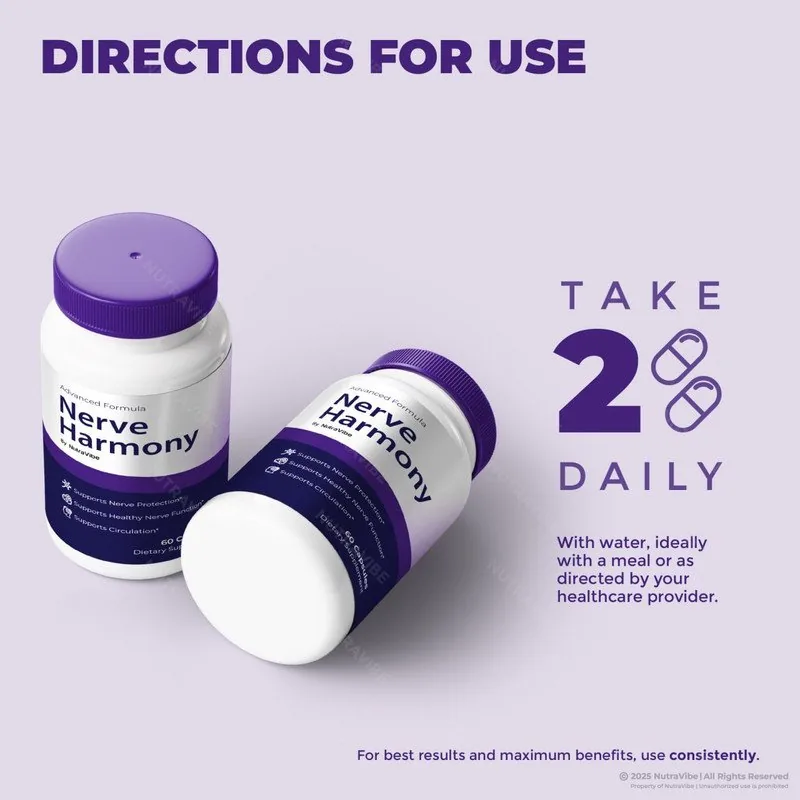
See how Nerve Harmony's formula is positioned, which ingredients have real research behind them, and the current pricing.