Curcumin and Turmeric for Nerve Health: The Evidence
Quick Answer: Does curcumin actually support nerve health?
Turmeric's active compound, curcumin, is mechanistically promising for nerves: preclinical studies show improved axonal regeneration, myelination and higher BDNF, a nerve-growth protein. But human trials are still thin, and curcumin is poorly absorbed unless paired with piperine or a lipid formulation. Treat it as encouraging early science, not proven relief.
- The promise: striking nerve-regeneration signals in lab and animal work.
- The catch: few, small human trials for nerve health specifically.
- The fix for absorption: black-pepper piperine or a lipid/enhanced formulation.
Few supplements enjoy the reputation that turmeric does. It is a fixture of the "natural anti-inflammatory" shelf, and for nerve health in particular the underlying science is genuinely interesting — more interesting than a lot of what gets marketed for nerves. But interesting is not the same as proven, and turmeric is a textbook example of a supplement where the laboratory story runs well ahead of the human evidence. This article lays out both halves honestly: why researchers are excited, and why you should keep your expectations grounded.
Turmeric, curcumin, and why the distinction matters
Turmeric is the golden spice; curcumin is the best-studied active compound within it (part of a family called curcuminoids). Almost all of the nerve-related research focuses on curcumin specifically, often at concentrations far higher than you would get from sprinkling turmeric on food. That single fact shapes everything downstream: when a headline says "turmeric regenerates nerves", it is usually describing purified curcumin in a dish or an animal model, not a curry. Keeping the spice and the isolated molecule separate is the first step to reading this evidence accurately.
What curcumin appears to do at the nerve level
The mechanistic findings are what make curcumin stand out. Across preclinical studies — cell cultures and animal models of nerve injury — curcumin has been linked to several effects that point in a hopeful direction:
- Axonal regeneration: faster or more complete regrowth of the long fibres that carry nerve signals after damage.
- Myelination: support for the myelin sheath that insulates nerves and speeds conduction.
- Nerve-fibre diameter: improvements in the calibre of regenerating fibres, a marker of healthier recovery.
- BDNF: higher levels of brain-derived neurotrophic factor, a protein that helps nerve cells grow, survive and maintain themselves.
The BDNF signal is especially intriguing, because neurotrophic factors are central to how nerves repair and stay resilient. Curcumin also carries broad antioxidant and anti-inflammatory activity, which is a plausible route to a nerve-friendly environment. Taken together, these give curcumin a coherent, believable mechanism — the kind of "here is how it could work" story that many nerve botanicals simply lack.

The honest caveat: the human evidence is thin
Here is where enthusiasm has to meet discipline. The most striking curcumin results come from cells and animals. When you look for large, well-designed human trials on curcumin for nerve health specifically, the shelf is nearly bare — what exists tends to be small, short, varied in formulation and quality, and often focused on general inflammation or joint comfort rather than nerve outcomes. That does not mean curcumin fails in people; it means it has not yet been properly tested for this use. "Promising in the lab, unproven in the clinic" is the accurate summary, and anyone who tells you curcumin is a proven nerve remedy is getting ahead of the data.
This lab-to-human gap is common in supplement science. Biology that works beautifully in a controlled dish or a rodent frequently underperforms in a complex human body over months of real life. Curcumin's regeneration findings are a strong reason to keep studying it — not yet a strong reason to promise results.
The absorption problem — and how it is solved
Even if you accept curcumin's potential, there is a practical obstacle: it is notoriously hard for the body to absorb. Plain curcumin has low bioavailability because it dissolves poorly in water, is metabolised quickly and is cleared rapidly. Swallow ordinary turmeric powder and most of the curcumin simply passes through without reaching your bloodstream in meaningful amounts. This is one reason culinary turmeric, however healthy as part of a good diet, is unlikely to deliver the concentrations used in research.
Formulators get around this in a few well-established ways:
| Approach | How it helps absorption |
|---|---|
| Piperine (black pepper extract) | Slows curcumin's breakdown, sharply increasing how much reaches the blood |
| Lipid / phospholipid formulations | Package curcumin with fats so it is absorbed more like a dietary lipid |
| Nanoparticle / micellar preparations | Shrink particle size or emulsify to improve uptake |
| Taking with a fatty meal | Modestly aids absorption of a fat-soluble compound |
The takeaway for label-reading: a curcumin or turmeric product with no absorption strategy at all is likely delivering far less usable curcumin than the milligram figure suggests. If curcumin is a reason you are considering a formula, look for piperine or an enhanced-absorption form — and remember that even the best-absorbed curcumin is still supported mainly by preclinical, not clinical, nerve data.
Where this leaves a sensible reader
Curcumin sits in an unusual spot: better mechanistic backing than most nerve botanicals, but weaker human proof than the marketing implies. A reasonable stance is to treat it as a low-risk, generally well-tolerated ingredient with real scientific interest and honest uncertainty — useful perhaps as part of an overall anti-inflammatory, nutrient-rich diet, not as a stand-alone answer to nerve symptoms. If you try a curcumin product, choose one with a credible absorption approach, keep your expectations proportionate to the evidence, and do not let it substitute for evaluating real symptoms with a professional.
Why lab results do not always translate
It is worth spending a moment on why "impressive in the lab" so often fails to become "impressive in people", because it is the single most important habit for reading supplement science. In a cell culture, researchers can bathe neurons in a precise concentration of curcumin and watch what happens — but that concentration may be far higher than anything a human bloodstream could ever reach from a capsule. In animal models, doses are frequently scaled up and delivered in ways that do not map neatly onto a person swallowing a tablet with breakfast. Add the tendency for striking positive results to get published more readily than null ones, and you have a literature that can look more conclusive than it is. This is not a reason to dismiss curcumin; it is a reason to treat glowing mechanistic headlines as the start of a scientific story, not the end of it. The molecule earns continued study precisely because its lab behaviour is interesting — but interest is a hypothesis, not a result you can bank on.
Curcumin's wider anti-inflammatory profile
Part of curcumin's appeal is that its potential is not narrowly about one pathway. It is studied as a broad antioxidant and anti-inflammatory compound, and chronic low-grade inflammation and oxidative stress are plausibly unfriendly to nerve tissue over time. That gives curcumin a general, systemic rationale on top of the specific regeneration and BDNF findings: an ingredient that may help nudge the internal environment in a calmer direction. The caveat is the same one that runs through this whole topic — "plausible systemic support" is a modest, honest claim, and it is a different thing from demonstrated relief of nerve symptoms. Curcumin fits most comfortably as one component of an overall anti-inflammatory pattern of eating and living, rather than as a targeted intervention that stands on its own.
What a sensible trial of curcumin looks like
If, understanding all of the above, you still want to try curcumin, a few principles keep expectations and risk in check. Choose a product with a credible absorption strategy — piperine or a recognised enhanced-bioavailability formulation — because plain turmeric powder is unlikely to deliver meaningful curcumin. Give it a fair, defined window of a couple of months rather than judging it in days, and decide in advance what you are actually tracking, so you are not fooled by day-to-day noise. Keep taking it with a meal containing some fat. And treat it as an add-on to sensible basics, not a replacement for evaluating symptoms properly. If you notice nothing after a reasonable trial, that is useful information too — it is fine to stop something that is not earning its place. And be wary of formulas that bury curcumin inside an undisclosed proprietary blend: if you cannot see the milligrams, you cannot judge whether there is enough to matter or compare it to what any study used, which quietly undoes the whole point of choosing a well-researched ingredient.
Safety and interactions to know
Curcumin is generally well tolerated, which is a genuine point in its favour, but "natural" does not mean "no interactions". At higher supplemental doses it may increase bleeding risk and could interact with blood-thinning medications, and it can affect how some other drugs are processed. People who are pregnant or breastfeeding, who have gallbladder or bile-duct issues, or who are scheduled for surgery should be especially cautious. As always, the concentrated supplement is where these considerations apply — turmeric as a cooking spice is not the concern.
The bioavailability problem, and what piperine actually fixes
Curcumin has a well-documented pharmacokinetic weakness: taken as plain turmeric powder it is poorly absorbed, rapidly metabolised and quickly cleared, so the concentrations that produce striking effects in a petri dish are difficult to reach in human tissue. That gap is the single most important thing to understand before reading any curcumin claim, because the laboratory literature and the clinical literature are not describing the same exposure.
Formulators address it in three ways: co-administering piperine from black pepper, using phospholipid or micellar complexes, or using nanoparticle preparations. The piperine route has the most human data behind it. A 2025 systematic review and meta-analysis of randomised trials reported that the combination reduced markers of inflammation and oxidative stress relative to control. Note carefully what that is and is not: those are blood markers in mixed populations, not nerve outcomes in people with neuropathy. No randomised trial has shown curcumin improving nerve conduction or nerve-fibre density in humans.
Where curcumin sensibly fits
As a general anti-inflammatory component of the diet, curcumin is reasonable and low-risk, and it sits naturally inside the pattern described in our anti-inflammatory diet guide. As a nerve treatment, it is currently a mechanism in search of a trial. That is not the same as "does not work" — it is "has not been tested in the people who would need it to work."
Two practical notes. First, dose transparency matters more for curcumin than for most ingredients, because the amount and the delivery form both change the exposure by large multiples; our page on proprietary blends and hidden doses explains why an undisclosed amount inside a mixed formula tells you nothing. Second, curcumin is not the only plant oil or extract sold on an anti-inflammatory rationale — evening primrose oil and GLA has a genuine randomised trial behind it in diabetic neuropathy, which is more than curcumin can currently claim, and magnesium is a better bet again if a shortfall is actually present. Curcumin can also affect blood clotting and interact with anticoagulants, so it belongs in the conversation with your prescriber rather than beside it.
Medical note: this article is general information, not medical advice. High-dose curcumin can interact with some medications, including blood thinners, and may not suit everyone. Talk to a healthcare professional before starting a curcumin or turmeric supplement, and see a clinician about any new or persistent nerve symptoms rather than self-treating.
Scientific references
- Hosseini H, et al. The Effects of Curcumin Plus Piperine Co-administration on Inflammation and Oxidative Stress: A Systematic Review and Meta-analysis of Randomized Controlled Trials (Current Medicinal Chemistry, 2025)
- Sanchez-Rosales AI, et al. The Effect of Dietary Patterns on Inflammatory Biomarkers in Adults with Type 2 Diabetes Mellitus (Nutrients, 2022)
- Callaghan BC, et al. Distal Symmetric Polyneuropathy: A Review (JAMA, 2015)
- NIH NCCIH — Turmeric: what the science says
- NIH Office of Dietary Supplements — botanical and dietary supplement fact sheets
- NINDS — Peripheral Neuropathy Information Page
Frequently asked questions
Does turmeric help nerve pain?
The honest answer is that it is promising but unproven in people. Turmeric's active compound, curcumin, has produced encouraging effects in laboratory and animal studies, but robust human trials for nerve pain are still limited. It may offer general anti-inflammatory support as part of a wider diet, yet it should not be relied on as a stand-alone remedy for nerve symptoms.
What does curcumin do at the nerve level?
In preclinical research, curcumin has been associated with improved axonal regeneration, better myelination and greater nerve-fibre diameter after injury. It also appears to raise BDNF, a protein that supports the growth and maintenance of nerve cells. These are mechanistic findings from the lab, so they show plausible pathways rather than proven benefits in humans.
Why is curcumin poorly absorbed?
Curcumin has low bioavailability: it dissolves poorly in water, is broken down quickly and is cleared fast, so little reaches the bloodstream from plain turmeric. Absorption improves when curcumin is paired with piperine from black pepper or delivered in a lipid or specially formulated preparation. Without one of those, most of a dose simply passes through.
Is the human evidence for curcumin strong?
Not yet. The most striking results come from cell and animal studies, while human trials for nerve health specifically remain few, small and varied in quality. Curcumin is mechanistically interesting and generally well tolerated, but the gap between laboratory promise and proven clinical benefit is real and worth stating plainly.
Related reading
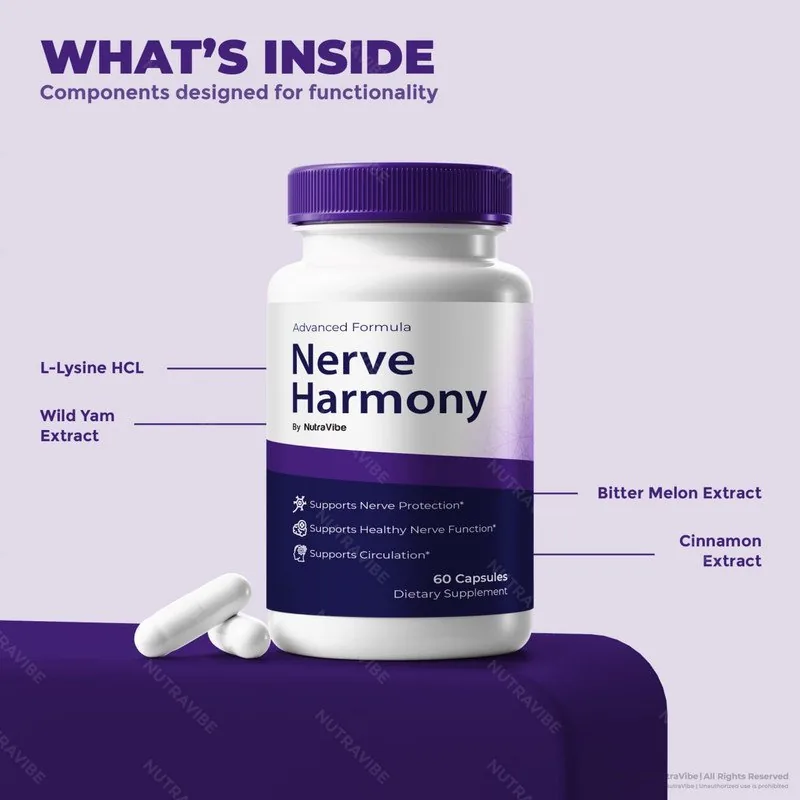
See how the botanicals in Nerve Harmony stack up
A clear look at each ingredient, what the evidence does and does not support, and the current pricing.