Proprietary Blends: The Hidden Doses Problem
What Is the Hidden Doses Problem with Proprietary Blends?
A proprietary blend groups several ingredients under one combined milligram total, so the amount of each individual ingredient stays hidden. That matters for nerve support because effective nutrients such as alpha-lipoic acid work at specific studied doses. Without per-ingredient amounts, you cannot tell whether a blend delivers a real dose or a token sprinkle designed to look impressive on the label.
- The gap: you see the blend total, never how much of each nutrient is inside it.
- Why it matters: nerve nutrients are dose-dependent — ALA near 600 mg, benfotiamine near 300 mg.
- The fix: favour full-disclosure labels you can check against the trial evidence.
What a “proprietary blend” actually is
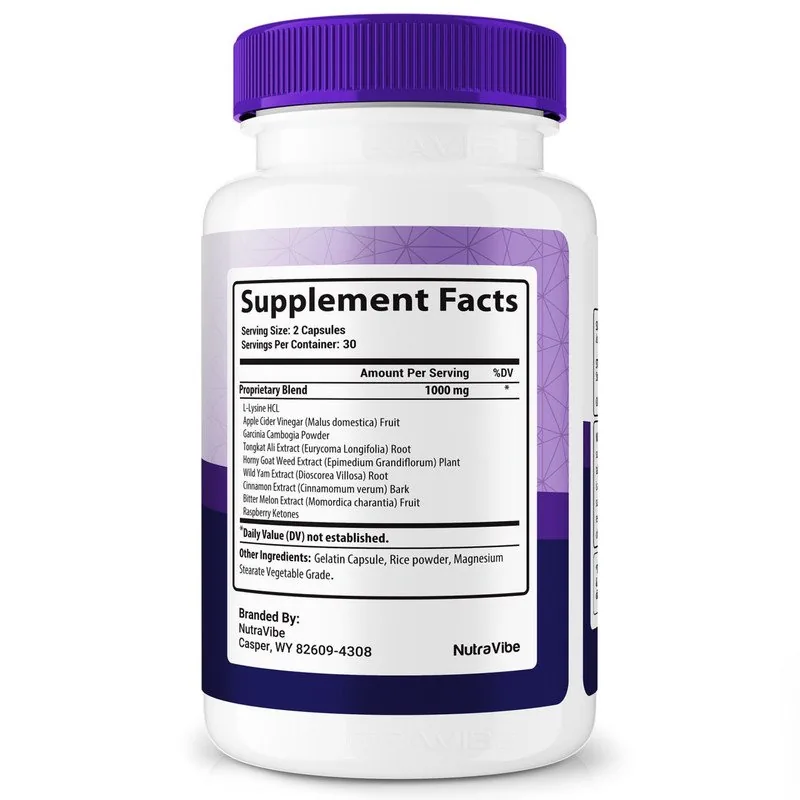
Open the Supplement Facts panel on most nerve-marketed products and you will often find a line like “Proprietary Blend — 1000 mg,” followed by a comma-separated list of ingredients. The single figure is the combined weight of everything in that list. What you will not find is how those milligrams are divided between the ingredients. It is a legal format, originally intended to let a manufacturer protect a genuinely novel recipe, but in practice it has become a convenient way to keep the most important number off the label.
There is one useful rule attached to the format: ingredients in a blend must be listed in descending order by weight. So the first name in the list is present in the largest amount and the last name in the smallest. That tells you the ranking, but not the size of the gaps. A 1000 mg blend could be 900 mg of the first ingredient and a rounding error of everything else, or it could be spread evenly. From the outside, the two look identical.
The math that hides the dose
Consider a blend that lists nine ingredients under a 1000 mg total. If the amounts were split evenly, each would land near 110 mg. But blends are almost never even. The ingredients that are cheap, or that the maker wants to feature in marketing, tend to sit near the top; the expensive or heavily-studied nutrients can quietly drift to the bottom of the list at a few milligrams each. Because only the total is printed, both scenarios are perfectly compliant and completely indistinguishable to a shopper.
This is why the blend total can be misleading. A 1000 mg number looks substantial next to a single-ingredient product that discloses, say, 600 mg of one nutrient. But the 1000 mg is shared across everything, while the 600 mg is verifiable and dedicated. Bigger blend totals are not better doses; they are just larger buckets whose contents you cannot see.
Why nerve nutrients are especially dose-dependent
For some supplement categories, the exact dose barely matters. Nerve-support nutrients are the opposite: the research is built around specific amounts, and dropping well below them tends to drop the effect too. A few examples show how narrow the window can be:
- Alpha-lipoic acid (ALA). The randomised trials for diabetic neuropathy symptoms mostly used around 600 mg per day. That is the number the evidence points to — not 60 mg, and not an undisclosed slice of a blend.
- Benfotiamine (a fat-soluble form of B1). Study doses commonly cluster near 300 mg daily, sometimes split across the day. A trace amount tucked into a blend is not the same product the researchers tested.
- Acetyl-L-carnitine. Trials have typically used gram-level amounts, often in the 1–3 g range. That is far more than could realistically fit inside a modest blend total alongside eight other ingredients.
When a nutrient like this appears inside a proprietary blend, the name on the label is not the claim you should care about. The claim you should care about — the dose — is exactly the part that has been hidden.
“Pixie-dusting” explained
The industry has a nickname for adding a well-known ingredient in an amount too small to do much: pixie-dusting. The point is marketing, not function. The ingredient earns a spot in the name list and the sales copy, while the actual dose is a fraction of what any study used. Proprietary blends make pixie-dusting easy, because the tiny amount never has to appear in print. You are asked to trust that the impressive-sounding nutrient is present at an impressive amount — on faith.
None of this means a blended product is worthless or unsafe. Plenty of blends contain reasonable ingredients, and many people take them without issue. But when the goal is nerve support specifically, and the evidence for that support is tied to particular doses, a hidden amount is a real limitation you should factor into the price you are willing to pay.
How to read a label like a skeptic
You do not need a nutrition degree to pressure-test a label. Run through this quick checklist before you buy:
- Find the blend line. If active ingredients are grouped under one total, assume you cannot verify any single dose until proven otherwise.
- Check the order. If a headline nutrient sits near the end of the ingredient list, it is present in a smaller amount than everything above it.
- Compare to the research. Look up the studied dose for the nutrient you care about, then ask whether the whole blend total could even contain that amount alongside the other ingredients.
- Prefer disclosed doses. A shorter list with real milligram amounts beats a long blend you cannot audit.
- Note the form. The specific form matters too — benfotiamine behaves differently from plain thiamine, for example — so a transparent label should name it.
Studied dose vs. what a blend lets you verify
| Ingredient | Typical studied dose | What a blend label tells you |
|---|---|---|
| Alpha-lipoic acid | ~600 mg/day | Only that it is somewhere in the total |
| Benfotiamine (B1) | ~300 mg/day | Amount undisclosed |
| Acetyl-L-carnitine | ~1–3 g/day | Amount undisclosed |
| Vitamin B12 | Correcting a deficiency | Amount often undisclosed in blends |
What full transparency looks like
A transparent Supplement Facts panel lists each active ingredient on its own line, with its own milligram (or microgram) amount and its specific form. It states the serving size and how many servings are in the container, so you can work out the cost per studied dose rather than per bottle. With that information you can do the one thing a blend prevents: check each ingredient against the human research and decide, ingredient by ingredient, whether the product is likely to do what it says.
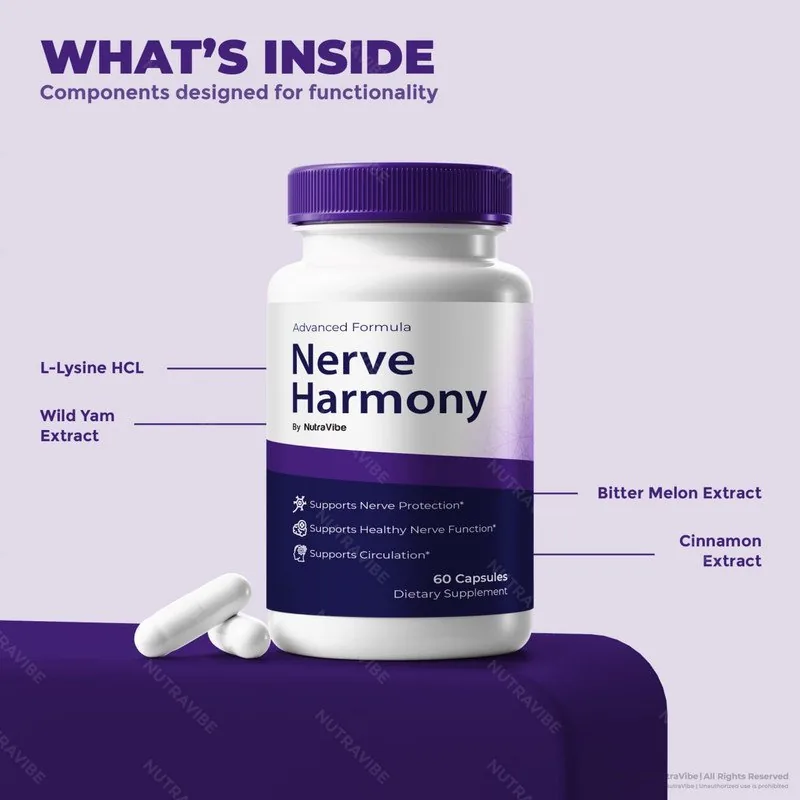
To be clear about our own coverage: Nerve Harmony, like many products in this category, uses a proprietary blend and discloses a single combined total rather than per-ingredient amounts. We reproduce the full ingredient panel on our review page so you can see exactly what is named, and we flag the same transparency limit there that we describe here. Our position is consistent across every product we cover — the more of the dose you can verify, the more confidence a label earns.
Why hidden doses matter more here than in most categories
A blend total is a problem in any supplement, but it is a particularly acute one for nerve products, because every ingredient in this category with real evidence behind it has dose-dependent evidence. That is not a rhetorical flourish — it is what the trials show.
The SYDNEY 2 trial tested 600, 1,200 and 1,800 mg a day of alpha-lipoic acid; the 600 mg dose carried the benefit and the higher doses mainly added nausea. The BENDIP trial of benfotiamine used specified daily doses and reported dose-related differences in outcome. The 2024 Cochrane review that graded alpha-lipoic acid did so on trials using a defined daily amount, not on the presence of the compound. In each case the number is the finding. Strip the number out and the study no longer says anything about the product in your hand.
What a blend total can and cannot tell you
Take a nine-ingredient, 1,000 mg blend. The arithmetic ceiling is unavoidable: if a single ingredient were present at the 600 mg studied dose, it would consume most of the blend and leave the other eight sharing what is left. If the ingredients are anywhere near evenly distributed, none of them reaches a trial dose. Both scenarios are consistent with the same label, and nothing printed on it lets you distinguish them. That is the entire problem in one paragraph.
This is also why "clinically studied ingredients" is such a durable phrase. It is literally true of a formula containing a well-studied compound at any amount whatsoever, and it implies something — that the product delivers what the study delivered — that the label cannot support. Our evidence survey of nerve-health supplements applies the same test across the whole category, and our guide to vitamins for nerve repair covers how the same move works with vitamins specifically.
Reading a panel in ninety seconds
Look for individually listed amounts first; if you see a single blend figure with an ingredient list beneath it, the doses are undisclosed regardless of how the marketing describes them. Count the ingredients against the blend total to sanity-check the arithmetic. Check whether the ingredients with actual nerve evidence appear at the top of the list, since ingredients are ordered by weight within a blend. Note any ingredient with a real upper limit — vitamin B6 above all. And treat the absence of a finished-product trial as the norm rather than a red flag, because almost no consumer formula has one. The broader pattern of overclaiming this feeds is covered in our page on nerve-health myths.
Medical note: this article is general information about labels, not medical advice. Numbness, burning, tingling or weakness can signal a treatable cause that a supplement will not fix. See a healthcare professional for a diagnosis, and talk to them before starting any supplement, especially if you take medication.
Frequently asked questions
What is a proprietary blend on a supplement label?
A proprietary blend is a group of ingredients listed together under a single combined weight, such as a 1000 mg blend. Regulations allow it, and the ingredients must appear in descending order by weight, but the individual milligram amount of each one is not disclosed. You see the total and the ingredient names, never the split between them.
Why are hidden doses a problem for nerve support?
Nerve-support nutrients work at specific studied amounts, so the dose is the whole point. Alpha-lipoic acid was trialled around 600 mg and benfotiamine around 300 mg. If those sit inside a blend with no per-ingredient number, you cannot tell whether you are getting a research-level dose or a trace amount added mainly so the name can appear on the label.
How do I know if a dose is effective?
Compare the amount on the label to the amount used in human trials for that ingredient. If a nutrient is disclosed at or near its studied dose, that is a meaningful signal. If it is buried in a blend, or listed far below the trial amount, treat it as a supporting sprinkle rather than an evidence-based dose, and lower your expectations accordingly.
What should a transparent label show?
A transparent label lists every active ingredient with its own milligram amount and the exact form used, so you can check each one against the research. It should also state the serving size and servings per container. Full-disclosure labels let you verify doses instead of trusting a single blended total that hides the amounts that actually matter.
Scientific references
- Ziegler D, et al. Oral treatment with alpha-lipoic acid improves symptomatic diabetic polyneuropathy: the SYDNEY 2 trial (Diabetes Care, 2006)
- Stracke H, et al. Benfotiamine in diabetic polyneuropathy (BENDIP) (Exp Clin Endocrinol Diabetes, 2008)
- Baicus C, et al. Alpha-lipoic acid for diabetic peripheral neuropathy (Cochrane Database of Systematic Reviews, 2024)
- U.S. FDA — Dietary Supplements labeling overview
- NIH Office of Dietary Supplements — ingredient fact sheets
- NINDS — Peripheral Neuropathy Information Page
See exactly what is on the Nerve Harmony label
We reproduce the full ingredient panel, note the proprietary-blend limit, and show the current pricing — so you can decide with the details in front of you.